Aging Refineries and Energy Infrastructure: Why Some Assets Last and Others Fail
8 minute read · HPG Engineering
Energy infrastructure is built to last. Refineries, gas terminals, and offshore platforms are typically designed for operational lifespans of 25 to 40 years, yet many facilities continue operating safely far beyond this period when supported by effective asset integrity management and structured maintenance programs.
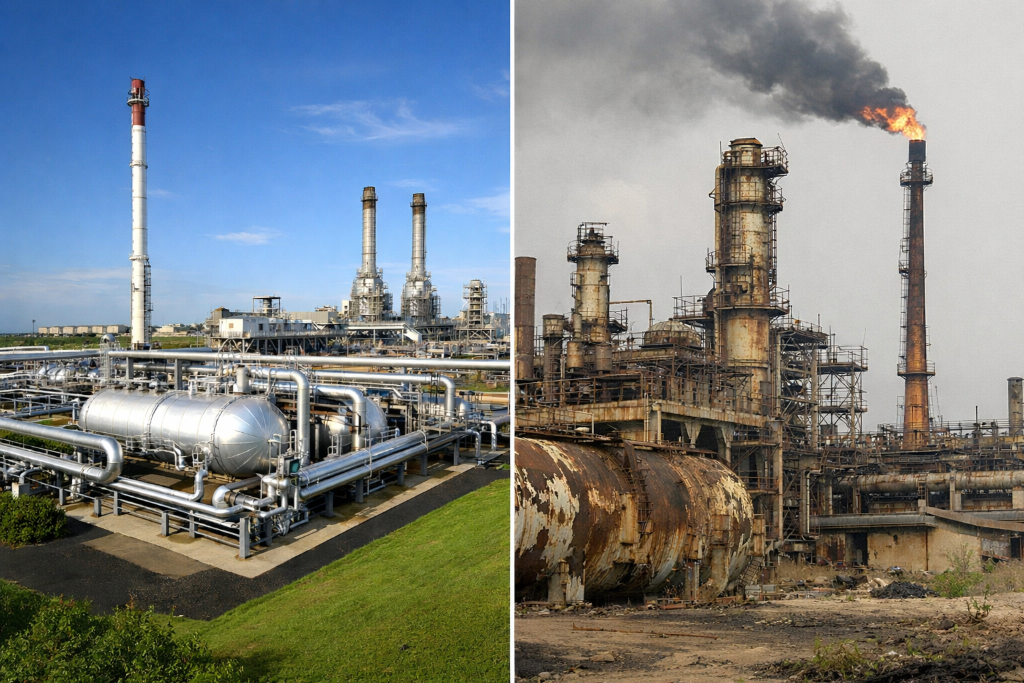
However, not all infrastructure ages equally well. Two facilities commissioned within roughly the same era illustrate this contrast clearly: the Port Harcourt refinery complex in Nigeria and the Theddlethorpe Gas Terminal in the United Kingdom.
Both facilities were constructed during the expansion of the global oil and gas industry in the mid-to-late twentieth century. Both were critical pieces of national energy infrastructure. Yet decades later, their operational performance diverged significantly.
By the 2010s, the Port Harcourt refinery had experienced repeated shutdowns and persistent reliability challenges despite multiple refinery rehabilitation projects. Meanwhile, the Theddlethorpe Gas Terminal continued operating effectively for decades before its closure in 2018, with many parts of the facility reportedly remaining in strong structural condition even after more than forty years of service.
Why do two pieces of aging oil and gas infrastructure built in roughly the same era experience such dramatically different outcomes? The answer lies in a combination of engineering discipline, maintenance culture, inspection practices, governance structures, and long-term asset stewardship.
Design Life Versus Operational Life
Industrial facilities are designed with conservative safety margins. Engineers anticipate that degradation will occur over time due to corrosion, fatigue, environmental exposure, and operational stresses. To account for this, infrastructure is designed with corrosion allowances, structural safety factors, inspection access provisions, and maintainability considerations.
However, design alone does not determine the longevity of infrastructure. Facilities must be supported by continuous structural integrity management and preventative maintenance throughout their operational life.
Across the North Sea, many offshore platforms installed in the 1970s remain operational today because operators conduct periodic life-extension engineering assessments, corrosion mitigation programs, and targeted upgrades. Facilities such as the Theddlethorpe Gas Terminal benefited from this systematic approach. Over decades of operation, inspection programs, preventative maintenance, and engineering reassessments ensured that degradation was identified early and addressed before it threatened safe operation.
Maintenance Culture and Refinery Asset Integrity Management
One of the most important determinants of long-term infrastructure performance is the maintenance culture of the operating organization. In mature operating environments such as the UK offshore sector, operators implement structured refinery asset integrity management systems and maintenance programs that include scheduled inspection campaigns, corrosion monitoring programs, preventative maintenance planning, engineering reassessment of aging assets, and planned shutdowns for major maintenance.
These practices ensure that deterioration is managed proactively rather than reactively. Where maintenance systems are inconsistently applied or underfunded, however, degradation can accelerate. Corrosion spreads, equipment fatigue increases, and operational reliability gradually declines. This dynamic has contributed to the maintenance backlogs experienced by several refineries and aging oil and gas facilities around the world.
Inspection, Monitoring, and Asset Integrity Management
Modern asset integrity management relies heavily on inspection technologies and data analysis. Common techniques include ultrasonic thickness measurements, corrosion monitoring probes, structural inspections of load-bearing components, and vibration monitoring for rotating equipment.
These tools support refinery equipment monitoring by enabling operators to track degradation trends and predict failure risks. Facilities that maintain comprehensive inspection records can model deterioration rates and prioritize repairs accordingly. Where inspection programs are irregular or poorly documented, operators lose visibility into the condition of their assets. Without reliable inspection data, maintenance becomes reactive rather than preventative.
Managing Maintenance Backlogs in Aging Infrastructure
For large industrial facilities, identifying degradation is only the first step. The greater challenge often lies in translating inspection findings into structured maintenance programs across thousands of assets. Major facilities such as refineries, gas terminals, and offshore installations contain vast numbers of components requiring inspection, repair, or replacement. Over time, these requirements accumulate into large refinery maintenance backlogs.
To manage these challenges, operators often rely on enterprise asset management platforms such as SAP and IBM Maximo. These systems allow operators to track inspection findings across thousands of equipment items, generate maintenance work orders, prioritize repair scopes based on risk assessments, monitor maintenance backlog growth, and allocate resources to the highest-risk infrastructure components.
Within such systems, engineering assessments are translated into large-scale prioritized repair programs, ensuring that the most critical integrity threats are addressed first. Engineering consultancies specializing in asset integrity engineering often support operators by reviewing inspection data, identifying high-risk degradation mechanisms, and developing risk-based maintenance strategies.
Operational Discipline and Brownfield Infrastructure Upgrades
Industrial facilities are designed to operate within defined process limits. Operating outside these limits — whether through pressure excursions, process instability, or equipment misuse — can accelerate degradation. Facilities with strong operational discipline maintain strict operating procedures, trained technical personnel, and continuous monitoring systems.
In many cases, aging facilities also require brownfield infrastructure upgrades, where new equipment is integrated into existing plants to maintain production capacity. Such projects require careful engineering analysis to ensure that existing structures, pipe racks, and foundations can safely accommodate additional loads.
Governance, Corruption, and Institutional Challenges
Beyond engineering practices, governance structures can also influence infrastructure performance. In many developed energy markets, procurement processes and maintenance budgets are subject to strong oversight. This helps ensure that funds allocated for repairs and upgrades are applied effectively.
In environments where governance challenges exist — including corruption, weak procurement controls, or mismanagement of maintenance funds — the impact can be felt directly in the physical condition of infrastructure. Maintenance programs may be inconsistently implemented, rehabilitation projects may deliver limited results, and funds intended for repairs may fail to translate into meaningful technical improvements. Over time, these institutional weaknesses can contribute to growing refinery maintenance backlogs and declining operational reliability.
Looking Ahead: Privatization and the Future of Aging Refineries
Across the global energy sector, many refineries and processing facilities constructed during the 1970s and 1980s are now entering advanced stages of their operational life. Managing these assets safely and economically will require renewed focus on asset integrity engineering, inspection programs, and structured maintenance planning.
In Nigeria, discussions around privatization of state-owned refineries have gained momentum in recent years. Proponents argue that private sector participation could introduce stronger operational discipline, improved governance structures, and access to capital required to rehabilitate aging infrastructure. Where privatization is implemented alongside effective regulatory oversight and robust refinery asset integrity management frameworks, it has the potential to improve long-term infrastructure performance.
However, privatization alone cannot guarantee success. The long-term reliability of energy infrastructure ultimately depends on consistent application of engineering discipline, transparent governance, and effective integrity management systems.
Conclusion
The longevity of critical energy infrastructure is rarely determined by engineering design alone. Instead, it reflects the cumulative impact of maintenance culture, inspection discipline, governance frameworks, operational management, and long-term investment in asset integrity engineering.
The contrasting experiences of facilities such as the Port Harcourt refinery and the Theddlethorpe Gas Terminal demonstrate how these factors can shape the trajectory of aging oil and gas infrastructure over decades. As global energy systems continue to rely on mature facilities, the ability to assess asset condition, prioritize repairs, and implement structured asset integrity management programs will remain essential.
Ensuring the safe and reliable operation of these facilities will require sustained commitment to the engineering practices and institutional frameworks that safeguard critical assets over time.